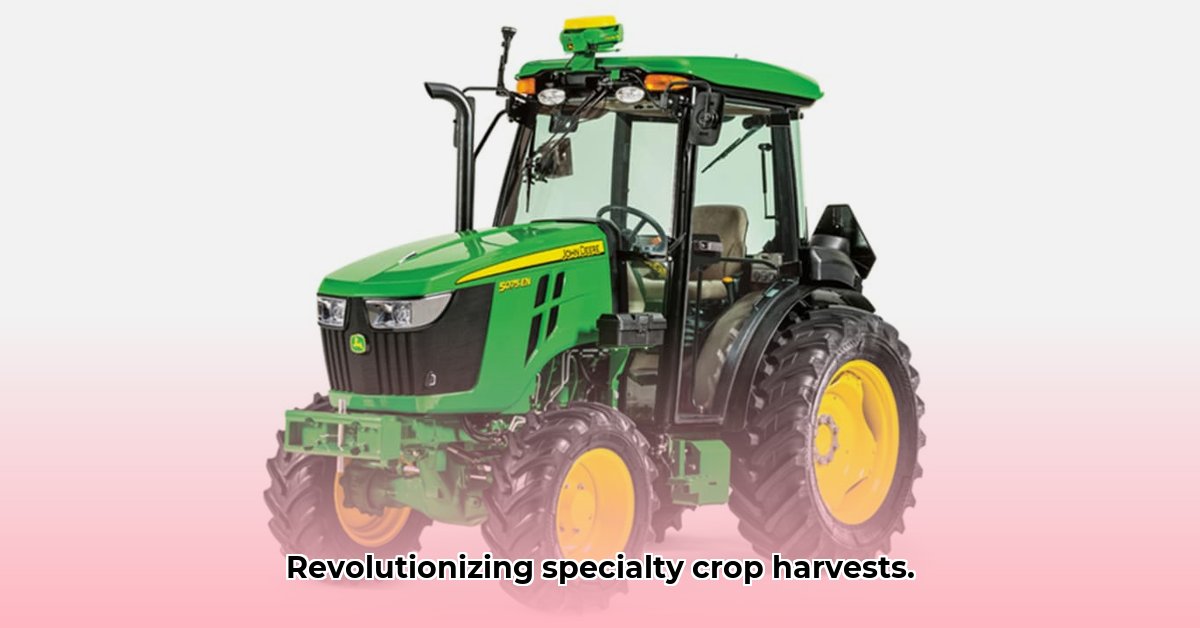
Specialty crop farming faces unique challenges, but innovative technology offers powerful solutions. This guide explores how specialty tractors and advanced technologies are revolutionizing this sector, paving the way for higher yields and greater sustainability. It's time to grow more, earn more, and work smarter. For more on tractor types, see this helpful guide: Tractor Types.
Overcoming the Hurdles of Specialty Crop Farming
Growing specialty crops presents several significant hurdles. Many farmers struggle to find and retain a sufficient workforce. Precise application of fertilizers, pesticides, and other inputs is crucial for optimal yields and minimal environmental impact, yet manual application is incredibly time-consuming and labor-intensive. The high initial investment required for new technology can be a major obstacle, especially for smaller operations. But what if there was a way to address all these issues simultaneously?
Specialty Tractors: The Precision Farming Powerhouse
Modern specialty tractors aren't just powerful machines; they're sophisticated tools that operate with remarkable precision. Equipped with advanced technologies, they enable extremely accurate input application – think of them as GPS-guided scalpels for your fields. Systems like John Deere's Smart Apply minimize waste and maximize effectiveness, leading to significant cost savings and a reduced environmental footprint. Integration with data management platforms, such as the John Deere Operations Center, provides invaluable insights into your crops' needs, improving decision-making and resource management. Isn't optimizing resource allocation and minimizing waste a key to increased profitability?
Addressing the Labor Crunch with Technology
The ongoing challenge of finding and retaining skilled labor is a major concern for many farmers. Specialty tractors, combined with automated systems, are transforming this landscape. Autonomous sprayers, such as the GUSS (Global Unmanned Spray System), allow a single operator to manage multiple machines concurrently. This dramatically increases productivity and directly addresses labor shortages, reducing reliance on hired hands and simplifying workloads. This translates into a more manageable operation and increased efficiency – isn't that the dream of every farmer?
Making the Financial Leap: A Smart Investment
The upfront cost of advanced equipment like autonomous sprayers is undeniably high. However, a long-term perspective reveals that cost savings and increased productivity often outweigh the initial investment. Many farmers are successfully navigating this by exploring creative financing solutions. Leasing options mitigate the initial financial burden, while grants and government subsidies (like those offered by the USDA) can offset a significant portion of the purchase price. Remember, this is an investment in the future of your farm – a future characterized by increased efficiency, profitability, and sustainability. Wouldn't a future of higher profits and lower labor costs be worth the initial investment?
A Step-by-Step Guide to Implementing Specialty Tractors
Successfully implementing specialty tractors requires a strategic approach:
Honest Self-Assessment: Identify your farm's primary challenges. Is it labor shortages, the need for precise application, or a combination of factors? This clear understanding will guide your decisions.
Thorough Research: Explore the range of specialty tractors and automated systems. Consider your crops, field size, and farming practices. Network with other farmers for real-world insights.
Realistic Budgeting: Calculate all costs – purchase/lease price, maintenance, training, and other expenses. Simultaneously, research funding opportunities, including grants, loans, and leasing options. Careful planning is crucial for success.
Choosing the Right Tools: Select equipment aligned with your farm's needs and budget. Avoid overspending on unnecessary features.
Comprehensive Training: Ensure your team receives proper training on operation and maintenance, including safety procedures and troubleshooting.
Continuous Monitoring and Adaptation: Regularly monitor progress, track data, and adapt your practices as needed. Technology evolves rapidly; staying informed is vital. This is a dynamic journey of improvement, not a one-time solution.
Weighing the Pros and Cons: A Balanced Perspective
Adopting specialty tractors offers many advantages but also presents certain drawbacks. Consider these factors carefully:
| Feature | Advantages | Disadvantages |
|---|---|---|
| Efficiency | Higher yields, lower labor costs, optimized resource utilization. | High initial cost, potential for equipment malfunctions. |
| Precision | Accurate input application, reduced waste, minimized environmental impact. | Requires technical expertise, potential data security vulnerabilities. |
| Sustainability | Reduced chemical use, lower fuel consumption, improved soil health. | Needs supportive regulations, potential for unforeseen consequences. |
| Market Competitiveness | Enhanced efficiency leading to improved profit margins and market position. | Dependence on technology, potential for rapid equipment obsolescence. |
Securing Funding for Sustainable Specialty Crop Mechanization
Acquiring the necessary funding is a crucial step in the process. Let's explore some avenues and strategies.
Identifying Funding Sources
Several avenues provide financial support for sustainable specialty crop mechanization:
Government Grants: Federal, state, and local governments offer grants focused on agricultural efficiency and sustainability. The USDA's Specialty Crop Block Grant Program is a prime example.
Private Investment: Angel investors and venture capitalists are increasingly interested in sustainable agriculture technologies. A strong business plan is essential.
Loan Programs: Agricultural lenders offer specialized loans with favorable terms for equipment purchases and farm improvements.
Crowdfunding: For smaller projects, crowdfunding can be an effective alternative.
Crafting a Winning Funding Proposal
A well-structured proposal is crucial for securing funding:
- Problem & Solution: Clearly articulate the challenges and how your proposed mechanization addresses them.
- Financial Projections: Provide detailed cost breakdowns and demonstrate a strong ROI.
- Environmental Benefits: Quantify the environmental benefits of your project.
- Sustainability Plan: Outline a long-term plan for equipment management and maintenance.
- Team Expertise: Showcase your knowledge and experience.
The Future is Now: Embracing Sustainable Specialty Crop Farming
Specialty tractors and related technologies are transforming specialty crop farming. While financial and technological hurdles exist, the potential benefits are substantial. By carefully assessing your farm's needs and strategically adopting innovative solutions, you can significantly boost yields, enhance sustainability, and achieve greater profitability. The future of sustainable specialty crop farming is powered by innovation, and it's here today.